
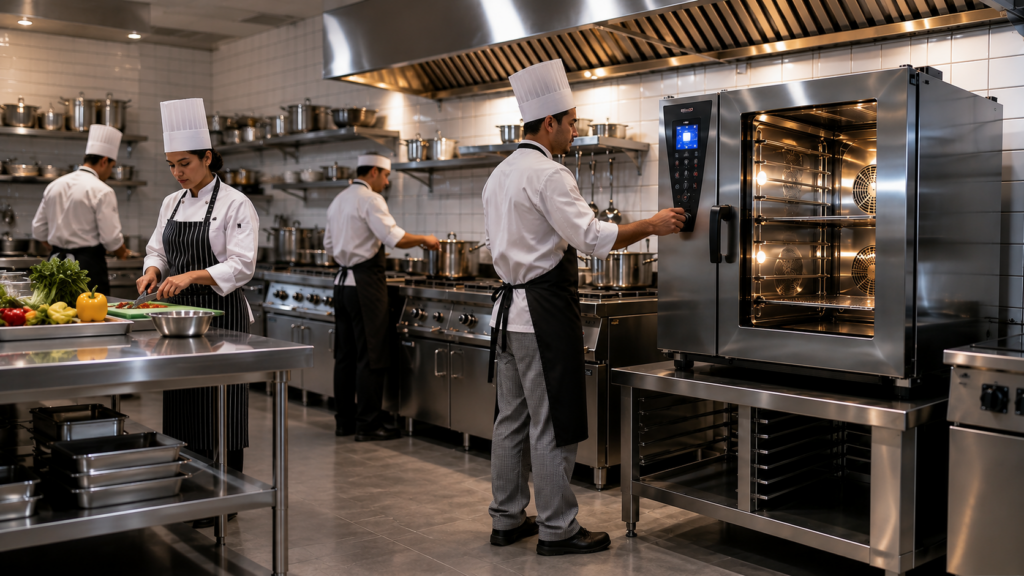
A commercial oven is one of the key equipment pieces in a professional kitchen. Whether you run a restaurant, bakery, hotel, café, cloud kitchen or a catering business, your oven operates constantly to provide you with quality food. If you do not pay enough attention to the maintenance of your commercial oven, then the best quality equipment may become ineffective, consume more energy, and malfunction.
Using a Commercial Oven Maintenance Checklist will allow you to increase efficiency, ensure food safety, prolong equipment lifespan, and save on expensive repairs. Moreover, you will be able to manage the kitchen operation even in the busiest working hours.
At NRS Kitchen, we develop and supply commercial kitchen equipment of premium quality. At the same time, we are convinced that proper maintenance is equally important.

Why Commercial Oven Maintenance Matters
The working environment of commercial ovens is very tough each day. The grease, food debris, moisture, and heat damage the internal components gradually.
- There are many benefits of maintenance, including:
- Better cooking quality
- Lower chances of breakdown of equipment
- Reducing energy bill
- Improvement in life span of equipment
- Food hygiene requirement
- Saving repair cost
- Safe operation of kitchen
Maintenance omission will cause inefficient heating, long cooking duration, high energy bill, and higher repair cost.
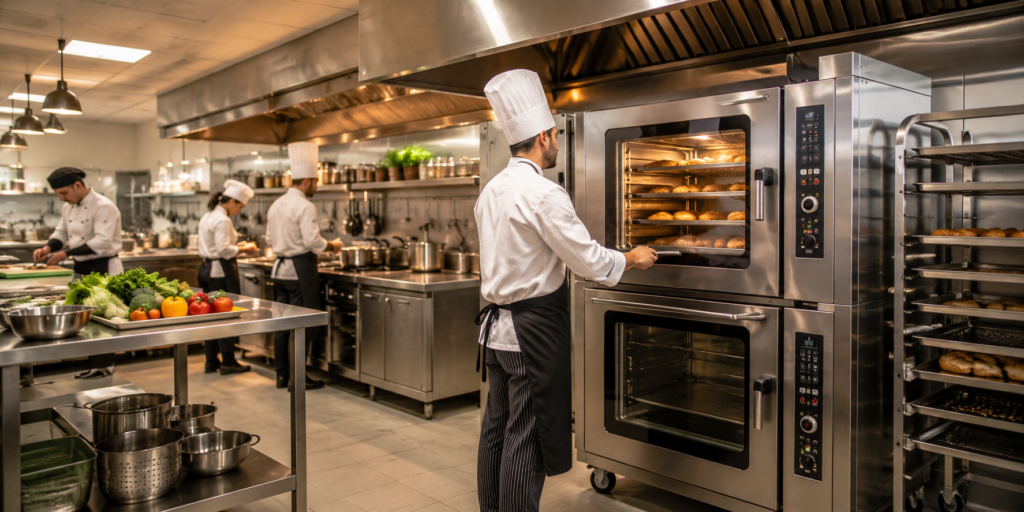
Daily Commercial Oven Maintenance Checklist
Proper cleaning avoids accumulation of grease and helps the oven function effectively.
1. Clean Interior Surfaces
Once the oven becomes cool:
• Food leftovers must be removed
• Grease must be wiped from the walls
• Floor of the oven should be cleaned
• Burnt food particles must be removed
Abrasive material is not recommended due to its damaging effect on the surface.
2. Clean Oven Door
The door of the oven should close tightly for retention of heat.
Everyday activities are:
- Washing glass panels
- Cleaning door handles
- Inspecting door seals
- Removing grease stains
Door gasket that is damaged will cause heat loss and result in long cooking time.
3. Clean Oven Racks
Rack cleaning should be done daily using safe food-cleaning agents.
Advantages of this step include:
- Efficient air circulation
- Efficient cooking
- Less smoke
- Hygiene improvement
4. Remove Grease Buildup
This is one of the most common factors behind faulty oven operations.
Concentrating on the following parts would help:
- Corners
- Heating elements
- Fan coverings
- Inner panel parts
Keeping grease under control also reduces fire risks.
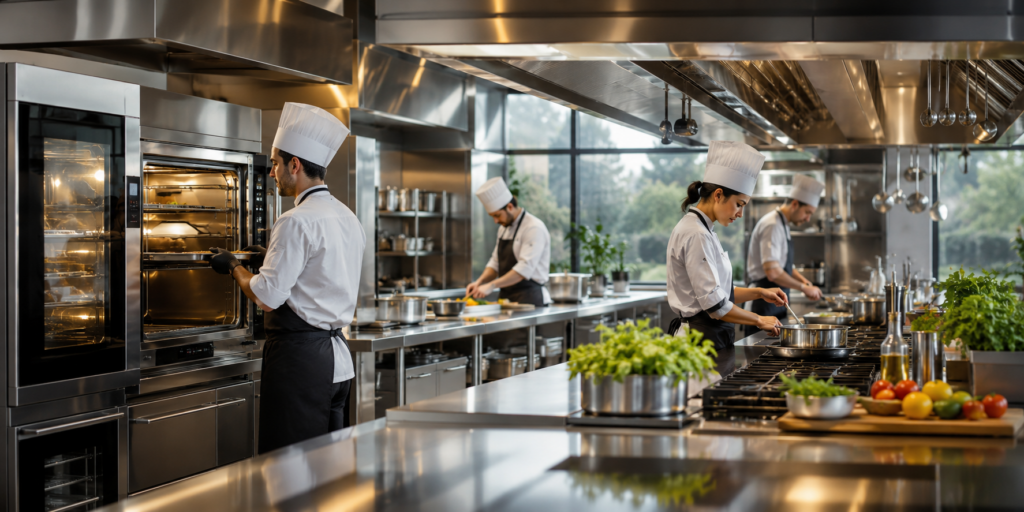
Weekly Commercial Oven Maintenance Tasks
Weekly inspections will help you spot minor issues before they become major repairs.
Deep Clean Interior Components
Do a deep clean on:
- Fan Guards
- Interior Panels
- Baking Chamber
- Ventilation Openings
Be sure to clean according to the manufacturer’s instructions.
Check Heating Performance
Keep an eye out for whether the oven gets to the right temperature fast enough.
Pay attention to:
- Inconsistency in baking
- Cooling spots
- Delayed heating
- Temperatures fluctuations
That probably means that there are some problems with the heating unit and thermostat.
Inspect Fan Operation
onvection ovens require good airflow from the fans.
Check that:
- The fan runs smoothly
- It makes no abnormal sound
- There are no vibrations
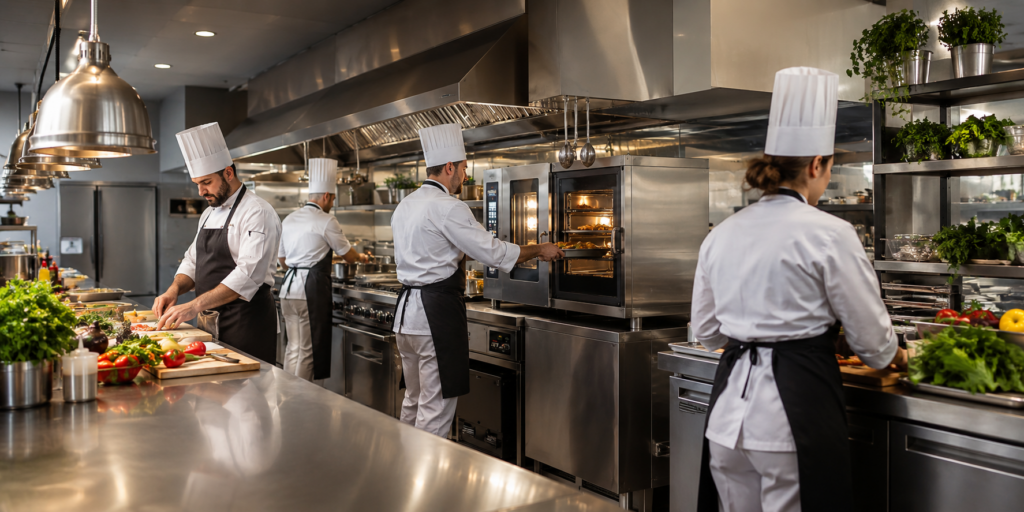
Monthly Commercial Oven Maintenance Checklist
Maintenance during the month is concentrated on equipment health.
Inspect Electrical Connections
Damaged electrical wires pose safety hazards.
Check the following:
- Electric cables
- Connectors
- Control panels
- Switches
The damaged wires should be fixed by experts.
Check Gas Connections (For Gas Ovens)
Gas ovens need extra inspections.
Inspect for:
- Leaky gas
- Clean burners
- Good flame
- Constant gas pressure
Do not repair gas ovens without help from professionals.
Inspect Door Hinges
Commercial heavy oven doors open hundreds of times daily.
Check for:
- Door alignment
- Good motion of door
- Loose hinges
- Force required to close the door
Functional hinges help in retaining heat inside.
Clean Ventilation System
Inefficiency in cooking may result due to lack of ventilation.
Dust and grease should be removed from:
- Exhaust vent
- Air channel
- Cooling fans
Quarterly Preventive Maintenance
Every three months, do some more thorough check.
Includes:
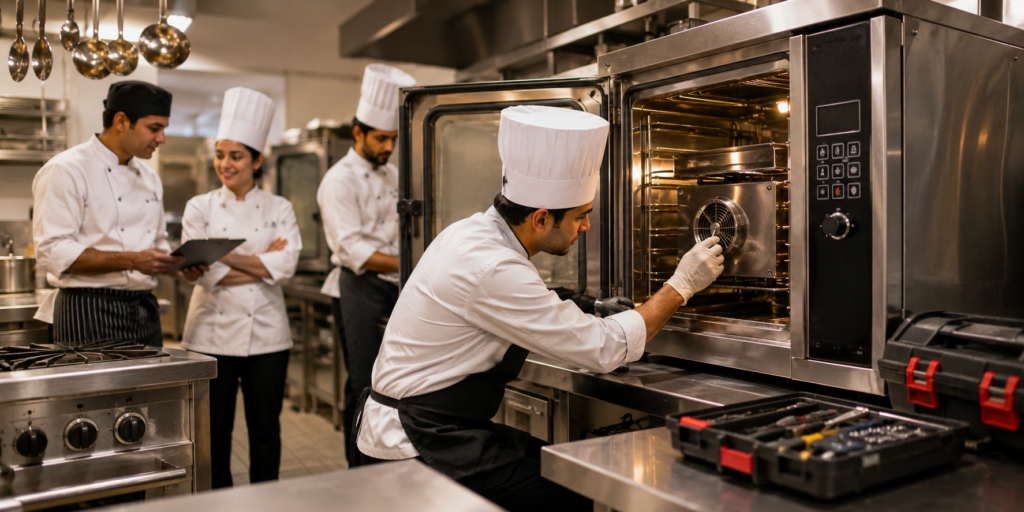
- Professional calibration
- Accuracy of temperature test
- Check thermostat
- Test control panel
- Fan motor check
- Testing of safety systems
Professional servicing can greatly increase the longevity of the equipment.
Annual Commercial Oven Servicing
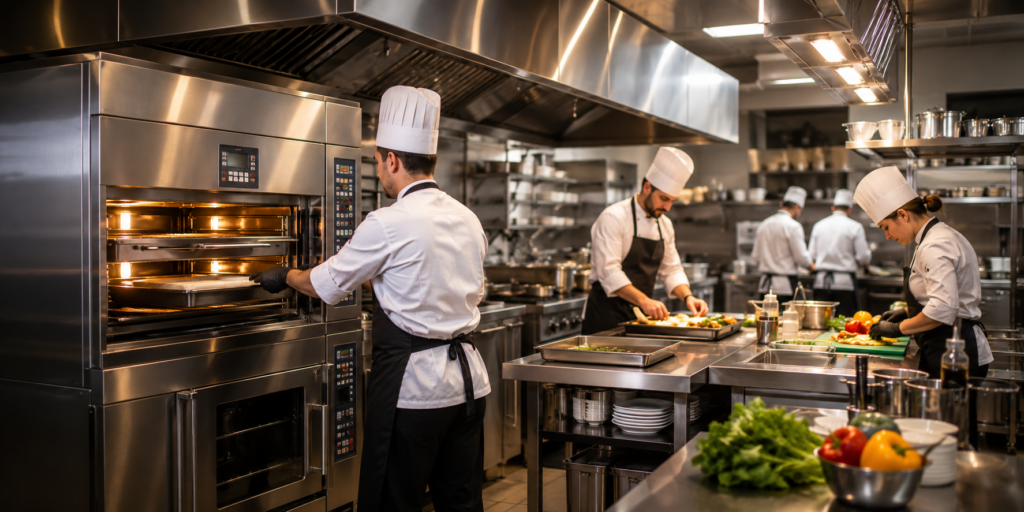
Your oven will be kept in great condition through annual service from certified technicians.
The professional service process generally consists of the following steps:
- Interior inspection
- Replacements of broken parts
- Burner service
- Electrical safety tests
- Temperature adjustments
- Performance tests
This can help avoid any surprises when you need your equipment the most.
Common Signs Your Commercial Oven Needs Maintenance
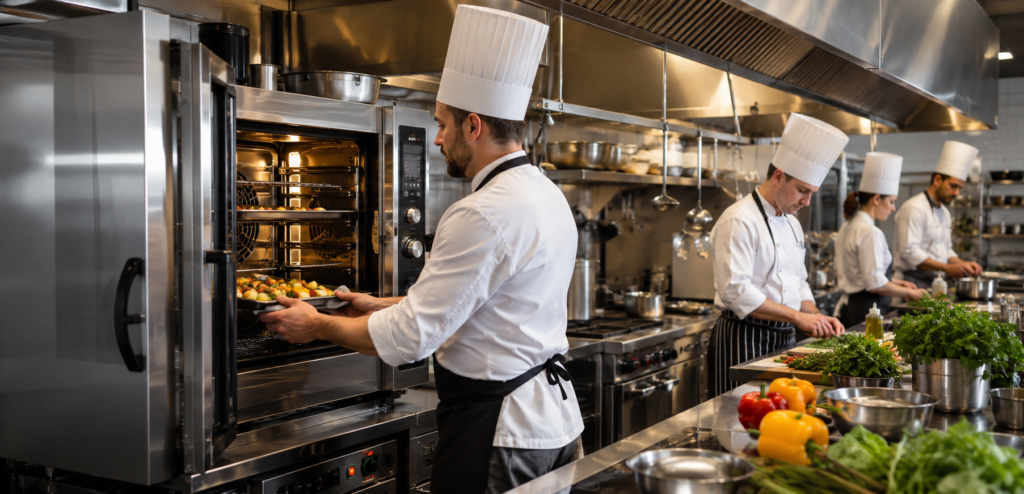
Early warnings will help you save money on repairs.
Watch out for:
- Irregular performance of the oven
- Unnecessary burning of food
- Increased pre-heating time
- Strange noises
- Excess smoke
- Error codes
- Unusual smell of gas
- Inefficient sealing of the oven door
- Temperature irregularity
- High electricity bills
If you have any of the above-mentioned problems, then it is advised to get your oven inspected at once.
Best Cleaning Products for Commercial Ovens
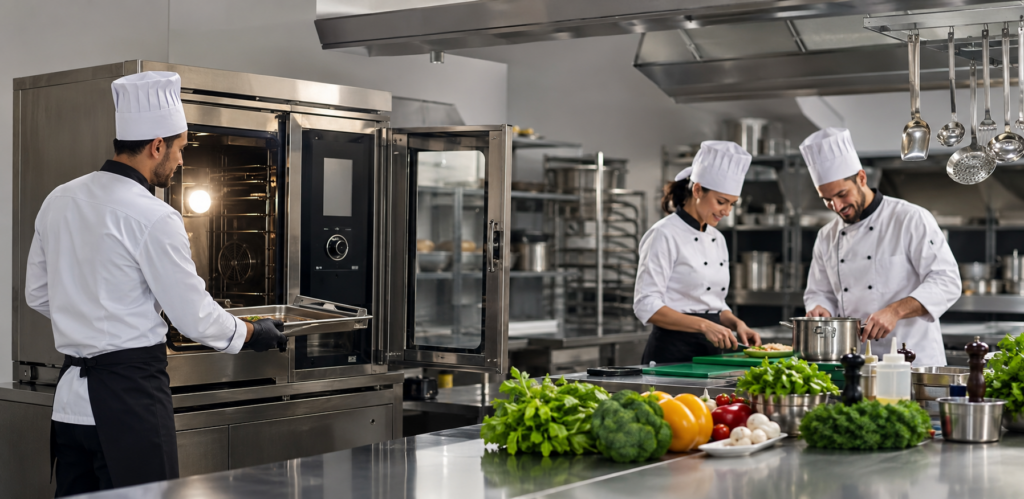
Selecting the right cleaning materials is a sure way of keeping your equipment protected.
The list consists of:
- Food degreasers
- Stainless steel cleansers
- Microfiber towels
- Soft scrubbing pads
- Warming water with mild soap solution
Do not use:
- Steel wool
- Strong acids
- Bleach solutions
- Metal scrapers
All the above-listed material can damage stainless steel surfaces and systems.
Safety Tips During Commercial Oven Maintenance
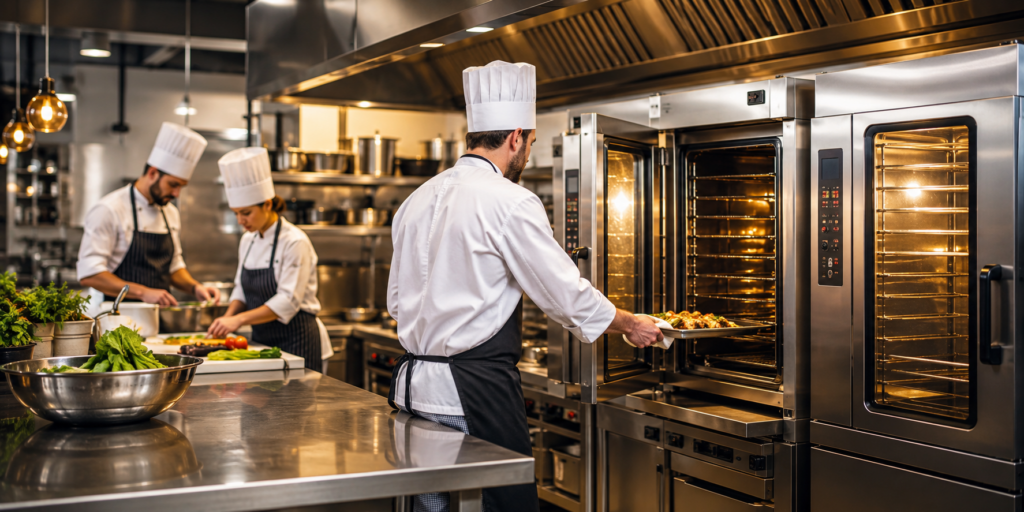
It is very important to prioritize safety when conducting maintenance activities on kitchen equipment.
For safety purposes, you should:
- Switch off the power supply prior to cleaning.
- Allow the oven to cool off.
- Use protective gloves.
- Use only recommended cleaning agents.
- Don’t use water spray on the electrical parts.
- Never try fixing electrical parts yourself if you don’t know how.
Follow the recommendations of the machinery manufacturer.
Tips to Increase the Lifespan of Your Commercial Oven
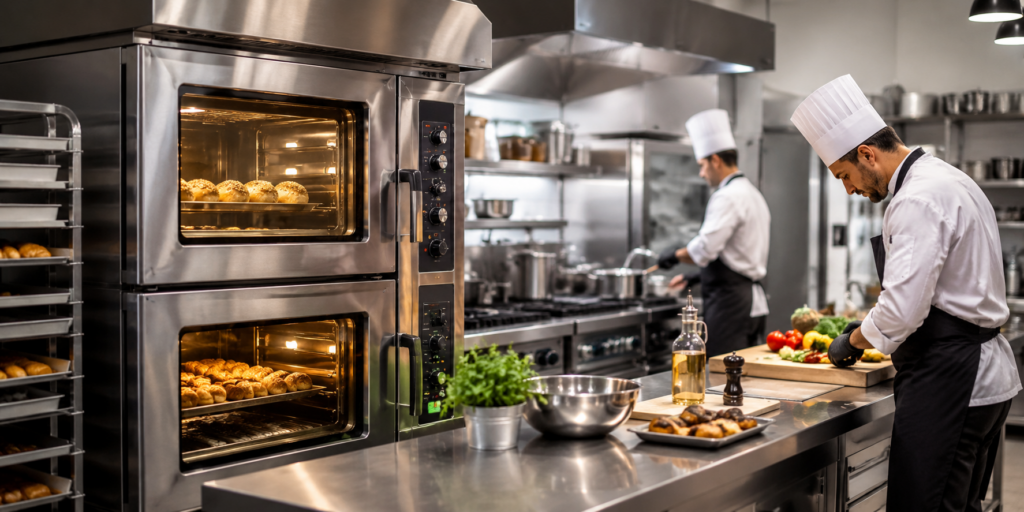
Good practices will help you extend the lifespan of your oven.
Do Not Overload
Overloading leads to decreased airflow and influences the cooking process.
Preheat Correctly
Make sure to wait until the correct temperature is achieved.
Select the Right Cookware
The metal trays used in commercial kitchens heat evenly.
Preventive Maintenance Schedule
Checking your equipment regularly helps avoid costly repairs.
Train Kitchen Personnel
Your kitchen staff needs to know about good practices.
Why Choose NRS Kitchen for Commercial Kitchen Equipment?
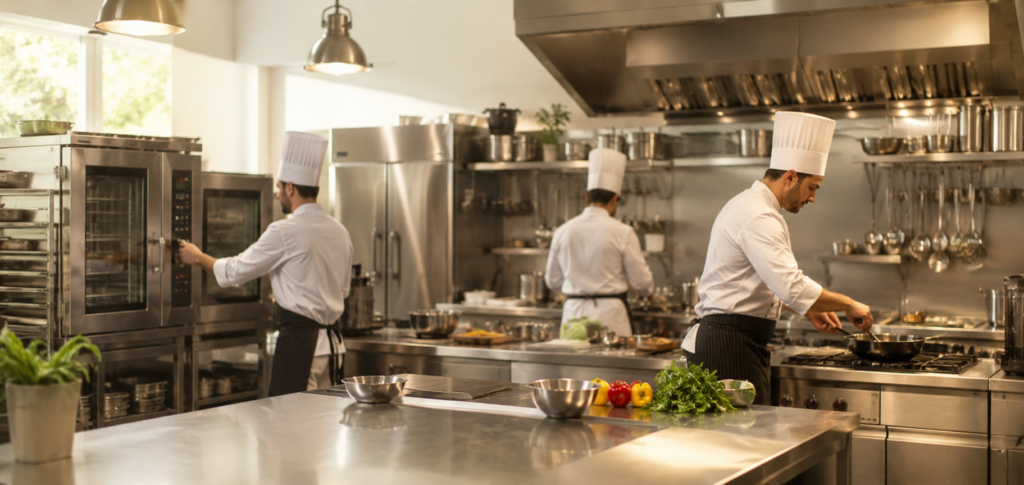
A high-efficiency oven begins with a reliable brand. NRS Kitchen is among the leading suppliers of commercial kitchen appliances in India, supplying good quality products to restaurants, hotels, bakeries, cafes, institutions, and catering services.
The choice of NRS Kitchen means that you have:
- Stainless steel of good quality
- Appliances that save energy
- Commercial strength that lasts long
- Modern kitchen appliances
- Reliable manufacturing processes
- Customized kitchen appliances
- Good after-sales service
- Affordable prices
Our appliances are designed to ensure continuous efficiency in addition to operational efficiency.

Frequently Asked Questions (FAQs)
1.How often should a commercial oven be cleaned?
Basic cleaning should be performed daily, while deep cleaning is recommended weekly. Professional servicing should be scheduled at least once a year.
2. Can regular maintenance improve energy efficiency?
Yes. Clean heating elements, proper door seals, and calibrated thermostats help the oven operate efficiently, reducing energy consumption.
3. How long does a commercial oven typically last?
With proper maintenance, a high-quality commercial oven can last 10–15 years or more, depending on usage and servicing.
4. What causes uneven cooking in commercial ovens?
Common causes include dirty fans, faulty heating elements, damaged door seals, incorrect temperature calibration, or blocked airflow.
5. Should commercial ovens be professionally serviced?
Yes. Annual professional servicing helps detect hidden issues, improves safety, and extends the equipment’s lifespan.
Final Thoughts
Every commercial kitchen requires a Commercial Oven Maintenance Checklist. Cleaning, inspection, servicing, and training are essential in ensuring consistency in performance, saving money on repairs, and extending the lifespan of commercial ovens.
From a restaurant owner, baker, hotel owner, or cloud kitchen owner, taking time to perform maintenance is far less costly than dealing with equipment failures.
At NRS Kitchen, we are committed to offering high-quality, effective commercial kitchen equipment. With good equipment and proper maintenance, magic happens in the kitchen.