
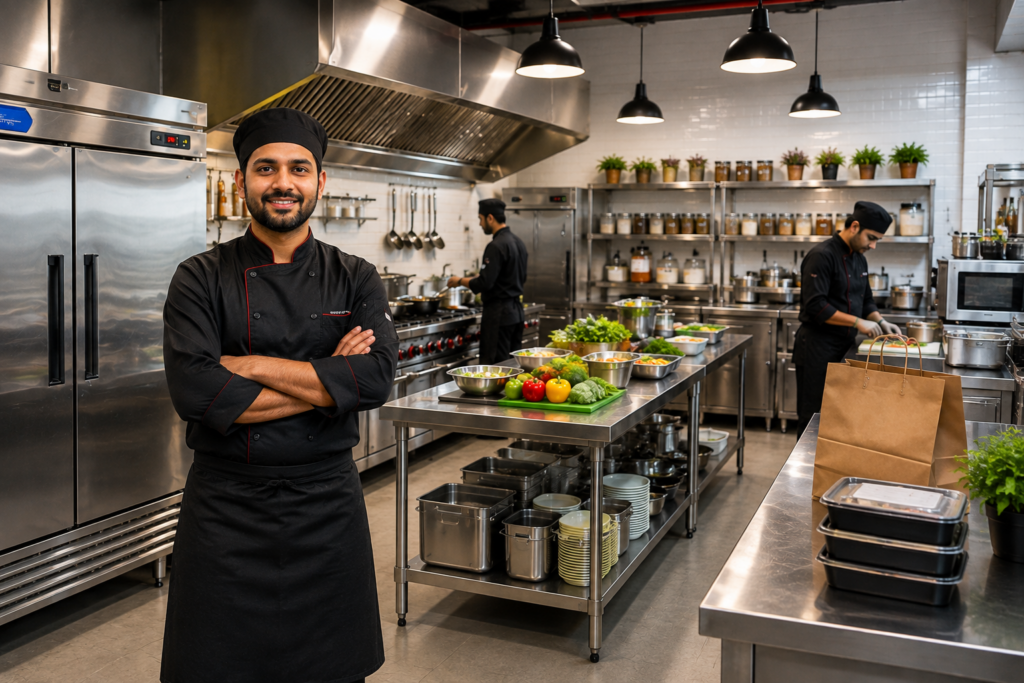
Cloud kitchens have changed the dynamics of the food industry as they have opened up new avenues for the restaurants to operate without any dining space. When you wish to start a cloud kitchen or upgrade your existing food business, it becomes necessary to get the right kind of equipment for your cloud kitchen.
A cloud kitchen which is efficient is one which focuses on speed, hygiene, workflow, and energy savings. It is advisable to go for stainless steel equipment as it not only boosts efficiency but also meets the food safety standards.
The below mentioned Cloud Kitchen Equipment Checklist contains everything you need in your cloud kitchen.
What Is a Cloud Kitchen?
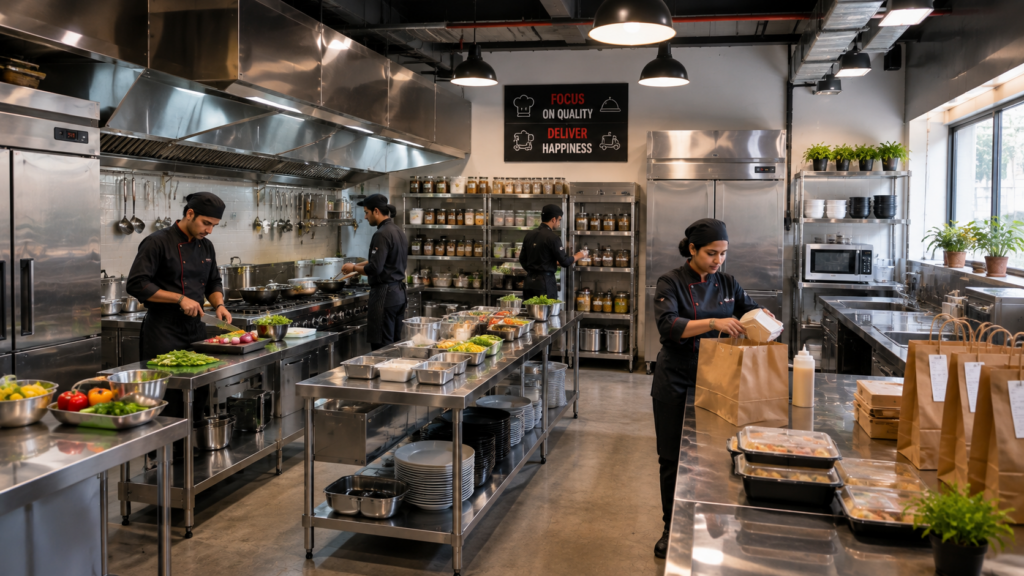
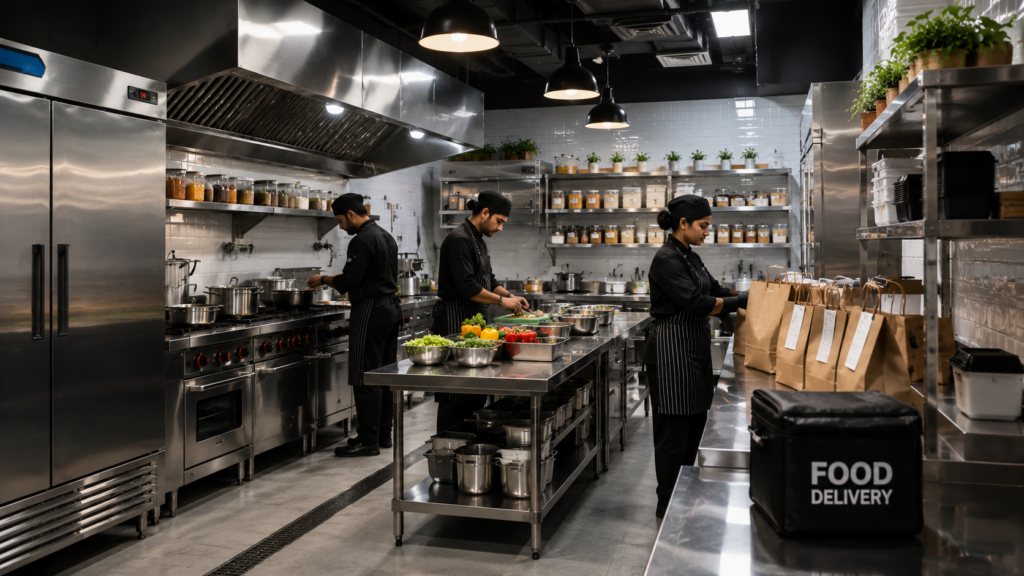
A cloud kitchen, or also called a ghost kitchen or virtual kitchen, is a commercial kitchen that is built only for food production to be delivered via food ordering applications. Customers order food online, therefore, there is no need for dining rooms.
Every inch counts, so choosing proper cloud kitchen equipment becomes extremely important for increasing efficiency and saving on costs.
Why Choosing the Right Cloud Kitchen Equipment Is Important
Purchasing good equipment will bring many benefits:
- Faster food preparation
- Good workflow in the kitchen
- Consistency of the food
- Less maintenance expenses
- Energy efficiency
- Food safety
- Easy to clean and maintain
- High efficiency during the busiest hours
Also, the use of professional grade stainless steel equipment helps to increase durability.
Complete Cloud Kitchen Equipment Checklist
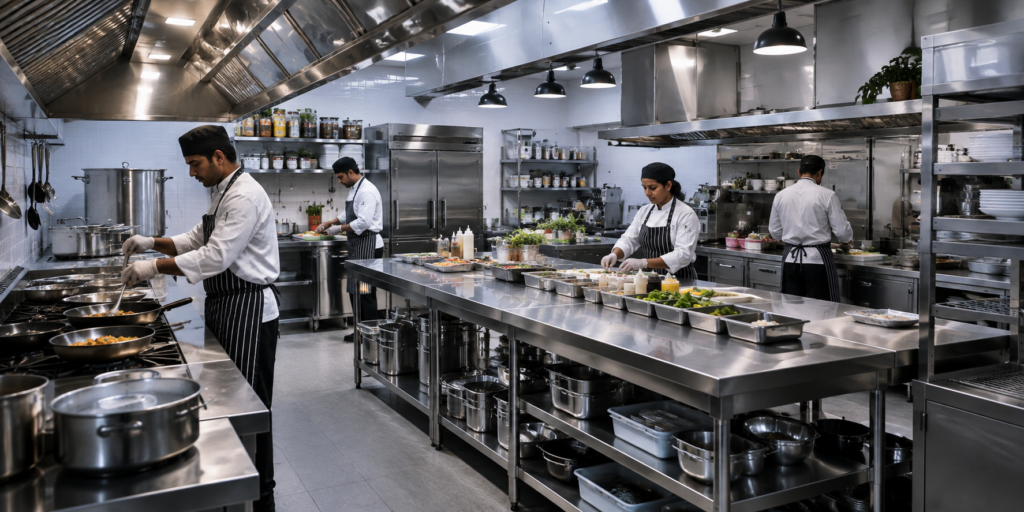
1. Commercial Cooking Range
The cooking range forms the core of every cloud kitchen.
Select based on your menu:
- Gas Range
- Four Burner Range
- Six Burner Range
- Chinese Cooking Range
- Stock Pot Range
Suitable for:
- Curries
- Gravy dishes
- Stir-fry dishes
- Rice dishes
2. Commercial Oven
According to your menu choose:
- Convection Oven
- Deck Oven
- Combi Oven
- Pizza Oven
Good for:
- Baking
- Roasting
- Grilling
- Pizza preparation
- Bakery products
3. Commercial Fryer
All restaurants preparing fried dishes need efficient fryers.
Common uses include:
- French fries
- Chicken
- Fish
- Snacks
- Frozen foods
Double tank fryers increase efficiency during peak times.
4. Exhaust Hood and Ventilation System
The ventilation system is designed to remove:
- Smoke
- Fumes
- Heat
- Oil
- Odors
An effective ventilation system helps in achieving a safer workplace environment.
5. POS and Order Management System
Technology is used by the cloud kitchen these days.
It needs the following:
- Point of Sale (POS) Software
- Kitchen Display System (KDS)
- Order Printer
- Barcode Scanner
- Inventory Software
6. Commercial Refrigeration Equipments
Proper cold storage makes the ingredients fresh.
The following are recommended refrigeration equipments:
- Upright Refrigerator
- Deep Freezer
- Under Counter Refrigerator
- Reach-In Chiller
- Cold Room (For large kitchens)
Refrigeration is important to reduce wastage and increase the quality of food.
7. Food Preparation Equipments
Equip your kitchen with the following equipments:
- Vegetable cutter
- Meat Mincer
- Dough Kneader
- Food Processor
- Planetary Mixer
- Blender
- Slicer
These machines reduce manual labor.
8. Commercial Sink and Wash Station
Cloud kitchens require:
- Three-compartment Sink
- Hand Wash Station
- Utility Sink
It is crucial to make sure that the hygiene and food safety standards are met.
9. Storage Racks and Shelving
An organized storage will make your ingredients safe and accessible.
Use the following storage:
- Stainless steel shelves
- Dry Storage racks
- Wall shelves
- Ingredient bins
It will reduce clutter and improve workflow.
10. Commercial Microwave Oven
Microwave oven can help you with:
- Reheating
- Melting ingredients
- Faster cooking
- Service
It is especially needed during rush hours.
11. Hot Holding Equipment
To maintain serving temperature before shipment:
- Bain Marie
- Food Warmers
- Hot Cabinets
They help in preserving the freshness of food before shipping out.
12. Packaging Station
A packaging station must have the following equipment:
- Packing Table
- Sealing Machine
- Label Printer
- Disposables Containers Storage Area
- Delivery Bags Storage Area
It ensures faster packaging of orders.
13. Commercial Dish Washer (Optional)
In a high volume kitchen, you need:
- Faster cleaning
- Less expensive labor
- Hygiene
- Less water consumption
14. Fire Safety Equipment
Safety should never be an afterthought.
Fire Safety Equipment includes:
- Fire Extinguisher
- Fire Blanket
- Smoke Detector
- Signs for Emergency Exit Points
- First Aid Kit
15. Point of Sale (POS) and Order Management System
A cloud kitchen uses technology nowadays.
The system requires:
- Point of Sale (POS) Software
- Kitchen Display System (KDS)
- Order Printer
- Barcode Scanner
- Inventory Software
Optional Equipment depending on Your Menu
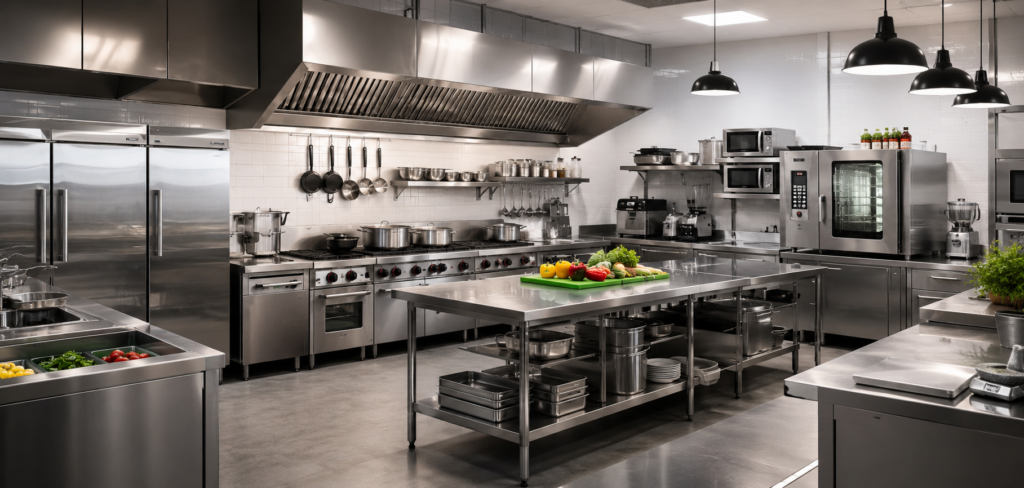
Based on your cuisine, you may also need:
- Shawarma Machine
- Salamander Grill
- Sandwich Griller
- Commercial Toaster
- Idli Steamer
- Dosa Plate
- Tilting Braising Pan
- Rice Cooker
- Pasta Cooker
- Juice Extractor
- Coffee Machine
Choose equipment based on your menu rather than buying all in one go.
Considerations for Purchase of Cloud Kitchen Equipment
While purchasing cloud kitchen equipment, keep in mind the following factors:
Size of the Kitchen
Carefully measure your kitchen space so as not to overcrowd.
Type of Menu
Ensure that the equipment suits your dishes.
Capacity
Calculate your order capacity to buy suitable equipment.
Energy Efficiency
Energy efficient equipment saves on utility bills in the long run.
Quality of Material
Stainless steel equipment is long lasting, corrosion resistant and easy to maintain.
Maintenance
Buy equipment which has easily available spare parts.
Budget
Investment should be on basic equipment only.
Cloud Kitchen Layout Suggestions
The process flow usually goes this way:
- Receiving & Storing
- Food Preparing Zone
- Cooking Zone
- Assembling Area
- Packaging Area
- Order Dispatching Area
- Cleaning & Washing Area
This will make sure that everything moves in an efficient manner and no extra efforts go into order fulfillment.
Guidelines for Efficient Operation of Cloud Kitchen
- Establish standard recipes to ensure quality.
- Schedule maintenance of kitchen equipment regularly.
- Training staff on using equipment properly.
- different storage places for raw foods and cooked foods.
- Daily monitoring of stock.
- Use high-quality packaging material for your food.
- Keep equipment clean after every session.
Why Should You Choose NRS Kitchen as a Supplier of Cloud Kitchen Equipment ?
Our stainless steel cloud kitchen appliances are built to cater to the needs of modern food enterprises. They are durable, hygienic, and efficient and are the ones that will assist you in managing your restaurant, cafe, hotel, and cloud kitchen effectively.
We offer:
- Individual kitchen setup services
- Premium quality stainless steel fabrication
- Cooking equipment
- Solutions for food refrigeration
- Equipment for food preparation
- Installation services
- Efficient after-sales services
- Reasonable prices
If you are planning to open a new cloud kitchen or expand the existing one, we will be happy to help you set up an efficient commercial kitchen.
Conclusion
Opening a successful delivery-only restaurant starts with choosing the right cloud kitchen equipment. Starting from cooking range equipment, moving on to refrigeration equipment, and then preparing and packaging, all the equipment is equally important for effective operation.
Choosing durable and efficient equipment will help you increase your efficiency and reduce maintenance costs. Use this checklist of Cloud Kitchen Equipment to establish an efficient kitchen.
Frequently Asked Questions (FAQs)
1. What equipment is essential for a cloud kitchen?
Essential equipment includes cooking ranges, commercial ovens, refrigerators, preparation tables, exhaust systems, sinks, storage racks, food processors, fryers, and packaging stations.
2. Why is stainless steel equipment recommended for cloud kitchens?
Stainless steel is durable, rust-resistant, easy to clean, hygienic, and compliant with food safety standards.
3. How do I choose the right cloud kitchen equipment?
Consider your menu, kitchen size, expected order volume, energy efficiency, available budget, and future expansion plans before purchasing equipment.
4. What is the ideal layout for a cloud kitchen?
An efficient layout includes storage, preparation, cooking, assembly, packaging, dispatch, and cleaning areas arranged to minimize movement and maximize productivity.
5. Can a small cloud kitchen operate with basic equipment?
Yes. Start with essential equipment such as a cooking range, refrigerator, preparation table, sink, exhaust hood, and packaging station. You can add specialized equipment as your business grows.
6. How often should cloud kitchen equipment be maintained?
Daily cleaning, weekly inspections, and periodic professional servicing help ensure equipment performance, food safety, and a longer lifespan.
7. Which refrigeration equipment is best for a cloud kitchen?
Upright refrigerators, deep freezers, under-counter refrigerators, and reach-in chillers are commonly used depending on storage requirements and kitchen size.
8. Why is proper ventilation important in a cloud kitchen?
A good ventilation system removes smoke, heat, grease, and odors, creating a safer, cleaner, and more comfortable working environment while protecting kitchen equipment.