

Consistency, efficiency, and speed are some of the key elements that make commercial bakeries successful, enabling them to produce high-quality baked products every single day. One of the vital machines in any commercial bakery is the mixer, as it can be used to produce bread, cake, pizza, or pastry mixes. Even though the commercial bakery mixers can function very efficiently, without proper maintenance, there will be a drop in efficiency and breakdown of the machine, resulting in expensive repairs.
This guide provides practical information about daily, weekly, and monthly maintenance procedures which prolong the life of the machinery and promote safety in the workplace. These maintenance practices apply to planetary mixers, spiral mixers, and other commercial bakery mixers.
Why Regular Maintenance of Commercial Bakery Mixers Matters
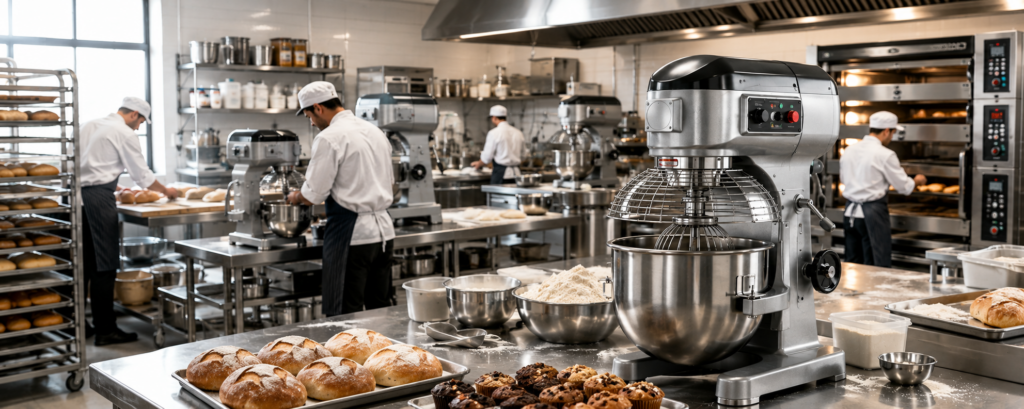
But maintenance is not only about cleaning the equipment. The maintenance helps us do the following:
- Extend the equipment’s lifespan
- Ensure there will be no surprises during production process
- Keep food hygienic
- Enhance mixing
- Save expenses on repairs and replacements
- Increase safety for the operators
- Keep high energy efficiency.
A well-maintained Commercial Bakery Mixers ensures consistent results and does not interrupt the production process.
Daily Maintenance Tips for Commercial Bakery Mixers
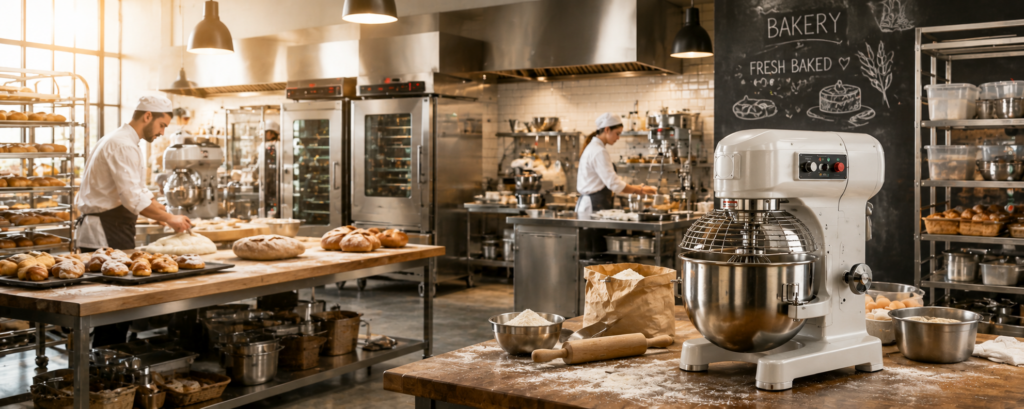
Inspection and cleaning should be a regular part of the baking routine.
1. Thorough Cleaning Of The Mixing Bowl
Clean the mixing bowl immediately after its usage by washing the remaining dough, flour, butter, or batter using hot water and detergent.
Avoid sticking ingredients inside the mixing bowl because cleaning the bowl later will be challenging due to the hardening of the ingredients.
2. Washing Attachments After Every Time Of Usage
Washing is required:
- Dough hooks
- Flat beaters
- Whisk
To avoid contamination every time of production.
3. Cleaning The Exterior
Use a microfiber cloth, as well as cleaning products, to clean the outside of the machine from flour dust, grease, and fingerprints that may accumulate on the surfaces made of stainless steel.
Avoid using abrasives for cleaning the bowl since they may damage the surface of stainless steel.
4. Keeping of Safety Devices
Before using the machine, be sure that:
- The bowl guard is functioning correctly
- The emergency stop device works
- The safety switches are functioning properly
“Don’t operate the mixing machines without the faulty safety devices.
5. Listen For Strange Sounds
Strange sounds like grinding, knocking, and vibrations may be generated by the worn bearings or other inner parts of the mixing machine.
Weekly Maintenance Tips
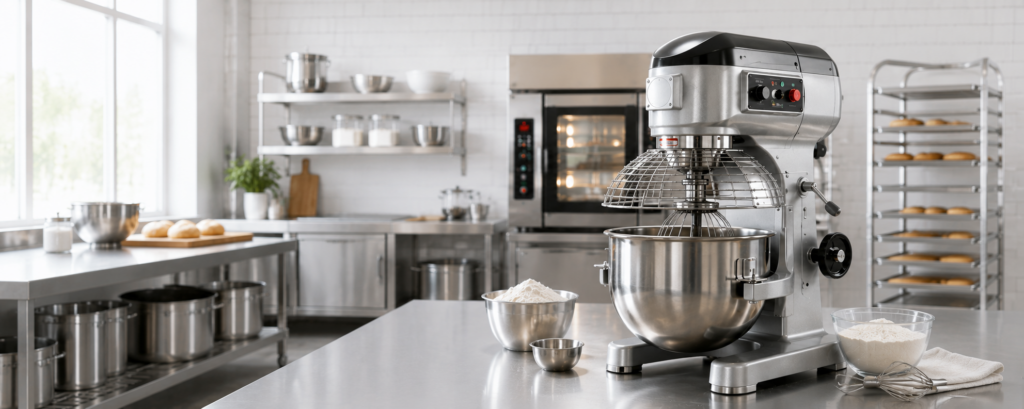
Regular inspections will prevent wear from becoming a problem and causing machine breakdown.
Tightening Loose Fasteners
Constant vibrations can lead to loose bolts including:
- Bolts
- Screws
- Attachment locks
- Bowl mounts
These should be inspected and tightened following the manufacturer’s instructions.
Check Power Cord and Connection
Power cords have to be examined for:
- Cracks
- Cutting
- Loose connections
- Heat exposure
Inspecting Mixing Tools
Be alert for:
- Dented dough hooks
- Broken beaters
- Weak whisk wires
Deteriorated tools reduce efficiency and contamination of food products.
Lubricate all moving parts as required
Commercial bakery mixers need to have their gears and joints lubricated regularly.
Ensure that food grade lubricants are used according to manufacturers’ instructions.
Do not over-lubricate any part of the equipment.
Cleaning of Air Vents
Air vents get clogged with dust and flour.
Ventilation should be done using compressed air or a brush.
Monthly Maintenance Tips
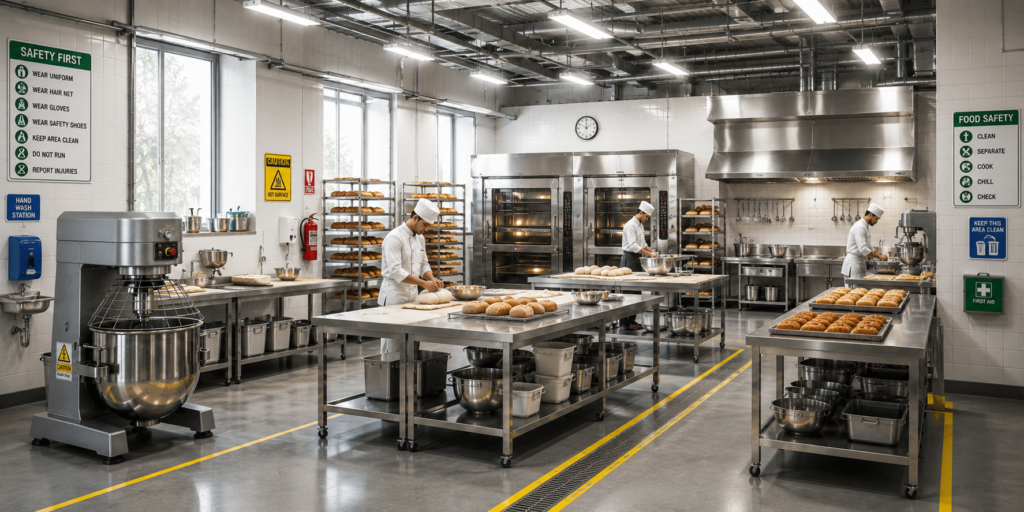
Monthly maintenance is done through deeper inspection that ensures long-term functionality of equipment.
Drive Belt Inspection
Look for:
- Cracks
- Frayed sections
- Wear
- Incorrect tension
Replace the belt prior to malfunction when operating the machine.
Check the Functionality of the Bearings
The bearing must turn smoothly without any loud noises or resistance.
Vibrations from the machine indicate a need for replacement of bearings.
Gearbox Inspection
Look for:
- Oil leakage
- Heat generation
- Noisy operation
- Slow mixing
The gearbox must be healthy to allow for smooth operation under heavy workload.
Speed Controls Check
Check for proper operation at all mixing speeds.
Any failure or hesitation in operation indicates the need for repair of electrical parts.
Deeper Cleaning of Hard-to-reach Areas
Flour cleaning must be done in the following areas:
- Motor
- Lift mechanism of the bowl
- Base frame
- Internal covers (if possible according to manufacture)
Preventive Maintenance Best Practices
Besides scheduled maintenance, bakery owners should follow these preventive practices.
1 Train Staff Properly
Operators should understand:
- Correct loading capacity
- Proper attachment installation
- Safe operating procedures
- Cleaning methods
Improper usage is one of the leading causes of equipment damage.
2 Avoid Overloading the Mixer
Each mixer has a maximum dough capacity.
The pressure is increased by levels above those recommended:
- Motors.
- Carrying Gearboxes (2)
- Drive belts
Always use the capacity chart supplied by the manufacturer.
3 Use Genuine Replacement Parts
While changing any part of your mixer, use only genuine or approved parts.
Non-genuine parts tend to lower the performance of the equipment and may even invalidate the warranty.
4 Professional Maintenance
Despite periodic cleaning, professional maintenance is advised every 6-12 months.
Common Signs Your Commercial Bakery Mixer Needs Maintenance
Warning signals to look out for include:
- Vibration
- Smell of burning
- Poor mixing
- Oil leakage
- Grinding sounds
- Faulty bowl lift
- Malfunctioning speed control
- Overheating
If you ignore these warning signals, your equipment will fail entirely.
Frequently Asked Questions
How often should Commercial Bakery Mixers be cleaned?
Cleaning should be performed after every production shift. Mixing bowls and attachments should be washed after each batch to maintain hygiene and prevent ingredient contamination.
Can I lubricate the mixer myself?
Only if the manufacturer’s manual recommends user lubrication. Always use food-grade lubricants and avoid lubricating sealed components.
How long do Commercial Bakery Mixers typically last?
With proper maintenance, high-quality commercial bakery mixers can operate efficiently for 10–15 years or longer, depending on usage and servicing.
Why is preventive maintenance important?
Preventive maintenance reduces unexpected downtime, extends equipment life, improves food safety, and lowers long-term repair costs.
Conclusion
Correct maintenance is very important if one wants maximum efficiency from his/her Commercial Bakery Mixers. Regular cleaning and preventive maintenance will help increase efficiency, minimize expenses, and increase equipment life span. Thus, with regular maintenance and solving small problems at an early stage, bakeries will be able to keep their work going smoothly and bake great products all the time.
No matter if you run a small or big bakery, proper maintenance of your Commercial Bakery Mixers will provide you with efficient working and successful business.