

Not only providing good-quality food but also providing good food safety, hygiene, and legal requirements of the food is one of the main things for becoming a successful food business. Whether it’s a restaurant, hotel, cloud kitchen, canteen, bakery or catering service, following FSSAI commercial kitchen regulations is necessary.
There are some FSSAI regulations for each commercial kitchen which have to be followed by the commercial kitchen. Following these FSSAI commercial kitchen regulations helps the business to keep their kitchen premises clean, to avoid food contamination and to be under food safety regulations.
In this article, we will discuss the most important FSSAI commercial kitchen regulations and their importance. Also, how to comply with these FSSAI commercial kitchen regulations using high-quality stainless steel kitchen equipment by NRS Kitchen.
FSSAI Commercial Kitchen – What Is It?
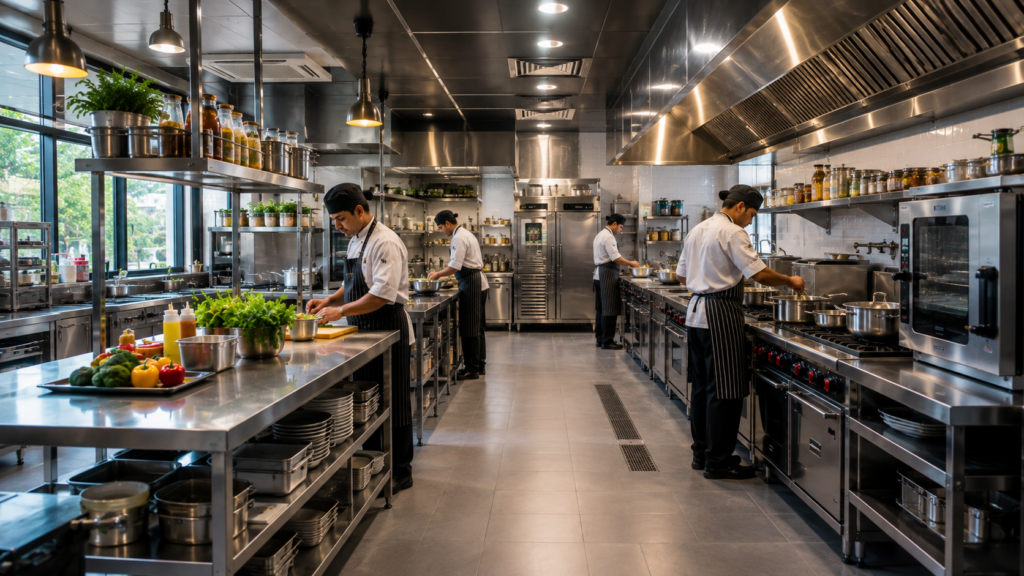
When a commercial kitchen meets the standards of hygiene, sanitization, and food safety set by the Food Safety and Standards Authority of India (FSSAI), it is known as an FSSAI commercial kitchen.
FSSAI commercial kitchen is required in:
- Restaurants
- Hotels
- Cafeterias
- Cloud kitchens
- Bakeries
- Catering services
- Food courts
- Institutional kitchens
Why Is It Important To Follow FSSAI Guidelines?
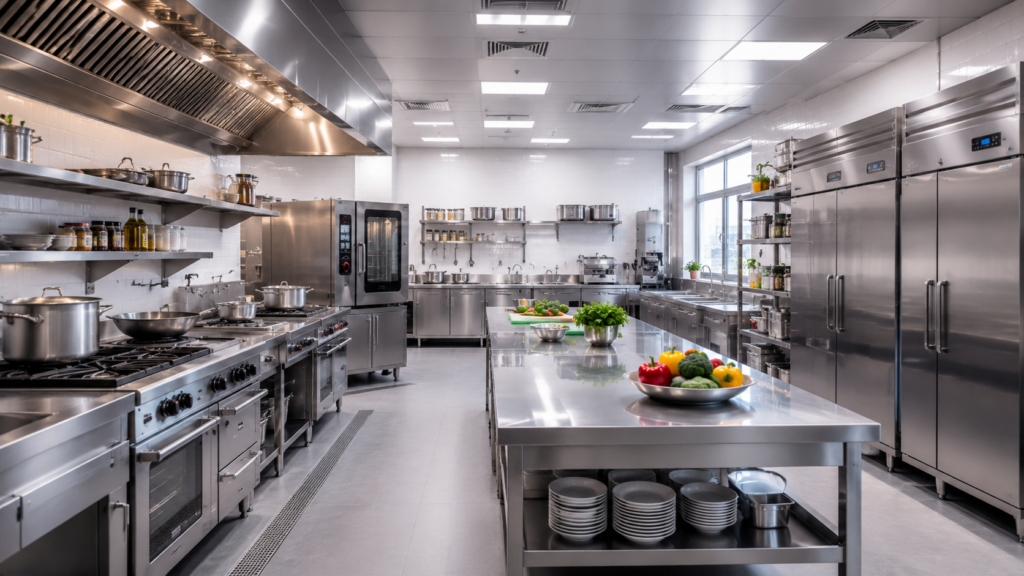
There are many reasons to follow FSSAI guidelines for commercial kitchen and some of them are listed below:
- Ensure safety and health of the customers
- Prevents foodborne disease
- Improved quality of food
- Gaining customer trust
- Passing inspection
- Avoiding legal troubles
- Improving business reputation
Essential FSSAI Guidelines for Commercial Kitchen
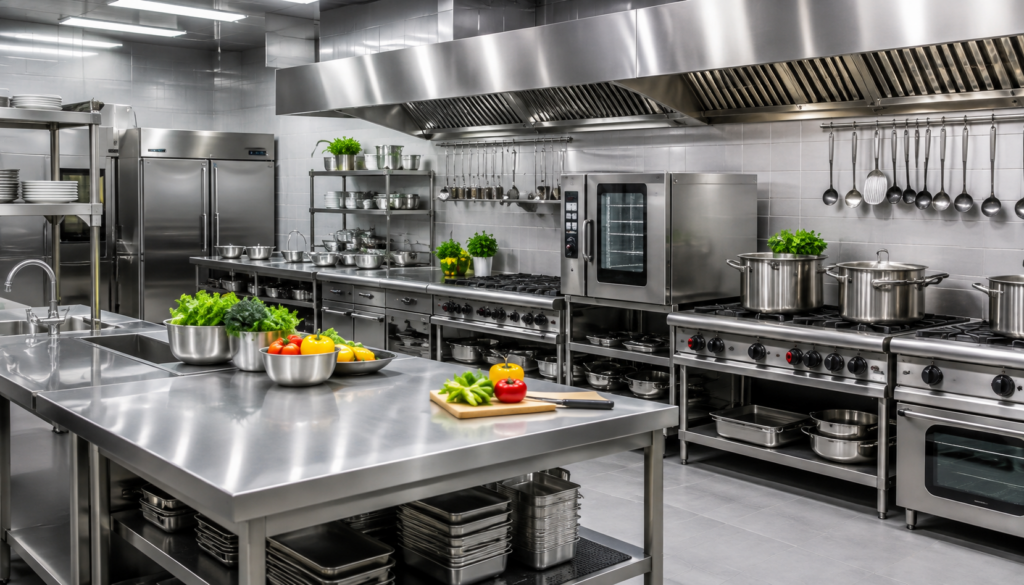
1. Proper Kitchen Hygiene Practices
Hygiene is a must for all FSSAI commercial kitchens.
Kitchens need regular cleaning of floors, walls, ceiling, work tables, sinks, and other kitchen equipment. Residue of food should not be left in kitchens since they encourage pest infestations and germs.
Regular schedules of cleaning must be followed daily.
2. Use Food-Grade Stainless Steel Kitchen Equipments
FSSAI suggests materials which do not corrode easily, are easily washable and are safe from any kind of toxic effect.
For commercial kitchens, following stainless steel items must be used:
- Work tables
- Preparation counter
- Storage racks
- Sinks
- Shelves
- Trolleys
It is very strong, hygienic material and perfect for food safety standards.
3. Hygiene Practices of Kitchen Employees
Kitchen employees have an important role in food safety practices.
Employees need to:
- Have frequent hand washing practices
- Wear clean uniforms
- Use hair nets
- Use gloves while handling ready-to-eat food
- Trim their nails
- Avoid using jewelry while preparing food
All employees in commercial kitchens of FSSAI need proper training.
4. Preventing Cross Contamination
There must be no contact between raw foods and cooked foods.
Good practices include:
- Separate chopping boards
- Distinct storage containers
- Dedicated preparation areas
- Correct labeling of food
- Separate refrigeration where needed
All this greatly helps in reducing chances of contamination.
5. Food Storage Methods
Food storage methods influence the quality and safety of the food.
Good food storage methods include:
- Storage of meat in separate compartments.
- Observing proper refrigeration temperature.
- Storage of dry foods in closed containers.
- Labelling of all food items stored.
- FIFO inventory system.
A well-organized kitchen at FSSAI helps save food from being wasted and keeps the food fresh.
6. Pest Management Practices
Pest invasion is one of the greatest sources of food contamination.
Commercial kitchens must ensure:
- Installation of insect proof screens
- Sealing of wall cracks
- Removing garbage on regular basis
- Professional pest control services
- Clean storage areas
FSSAI inspections always include pest management inspections.
7. Waste Management
No food should be allowed to get wasted inside the kitchen.
Some good practices are:
- Using covered dustbins
- Segregation of food waste
- Garbage removal on regular basis
- Clean waste bins on daily basis
- Proper drainage system.
8. Water Quality
Only pure, drinking-quality water is allowed for:
- Preparation of food
- Preparation of raw vegetables
- Preparation of utensils
- Making drinks
It is also essential to clean the water tanks from time to time.
9. Maintenance of Equipment
Even the most efficient equipment needs maintenance regularly.
Maintenance checks need to be done on the following equipment:
- Burners
- Ovens
- Refrigerators
- Ventilation systems
- Dish washers
- Mixers
10. Proper Ventilation
Proper ventilation system enables the elimination of:
- Smoke
- Steam
- Heat
- Grease particles
- Cooking smells
Commercial exhaust hoods and fresh air systems enhance the comfort of employees.
Documents Needed for FSSAI Compliance
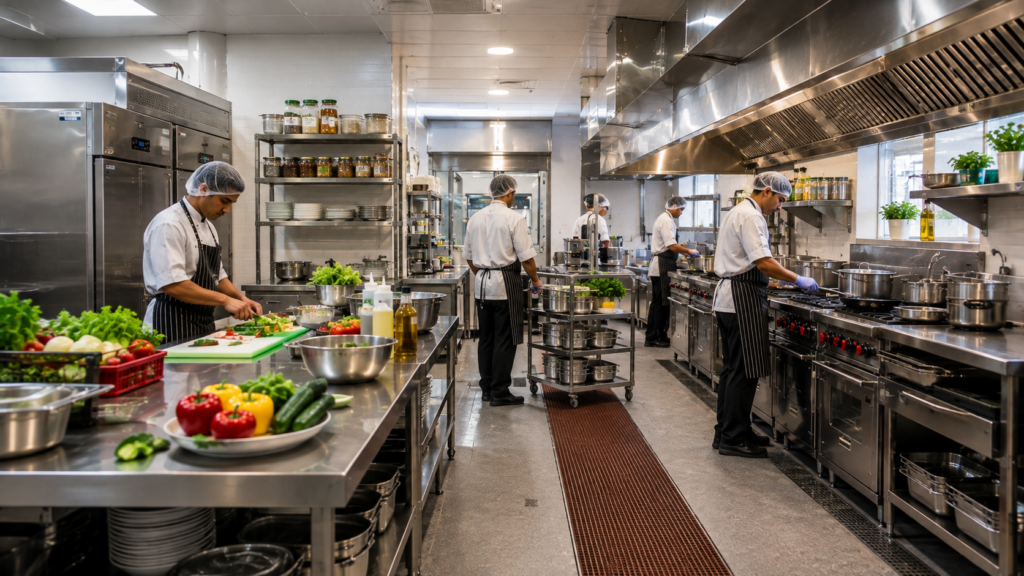
A business should ensure that it has documents such as:
- FSSAI License
- Food Safety Management Plan
- Cleaning schedules
- Training documentation
- Pest control documentation
- Maintenance documentation
- Temperature records
- Supply invoices
This makes the process of auditing easier.
Mistakes to Avoid in a Commercial Kitchen
There are common mistakes made by many businesses leading to failure of inspection, which include:
- Poor kitchen sanitation
- Improper food storage
- Use of expired products
- Absence of staff hygiene
- Damaged kitchen equipment
- Poor kitchen ventilation
- Maintenance documentations not kept
- Exposed waste containers
How NRS Kitchen Enables You to Create an FSSAI Compliant Kitchen
NRS Kitchen produces top-of-the-line stainless steel commercial kitchen equipment as per the current food safety standards.
Our range of products comprises the following:
- Stainless Steel Work Tables
- Cooking Ranges
- Exhaust Hoods
- Preparation Counters
- Storage Racks
- Washing Sinks
- Bakery Equipment
- Refrigeration Equipment
- Display Counters
- Customized Commercial Kitchen Solutions
With our strong and hygienic equipment, businesses can develop an efficient FSSAI commercial kitchen system.
Conclusion
It is crucial to keep an FSSAI commercial kitchen system for each food business. Not only will this ensure the adherence to the FSSAI rules but will also enhance the food quality and customer experience.
Hygiene maintenance, food business personnel training, use of stainless steel equipment, and good ventilation – all these factors affect the safety of food prepared in commercial kitchens.
Should you start a commercial kitchen or need to revamp an existing one, it is worth investing in high-quality equipment from NRS Kitchen.
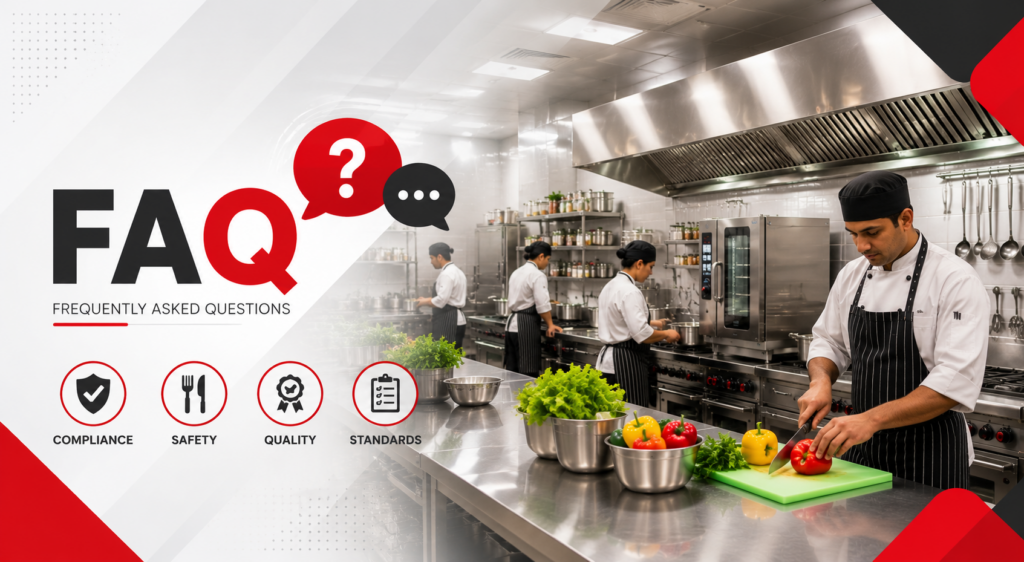
Frequently Asked Questions (FAQs)
1. What is an FSSAI commercial kitchen?
An FSSAI commercial kitchen is a food preparation facility that follows food safety, hygiene, and sanitation standards established by the Food Safety and Standards Authority of India.
2. Is an FSSAI license mandatory for commercial kitchens?
Yes. Most food businesses operating in India must obtain an appropriate FSSAI registration or license based on their business size and turnover.
3. Why is stainless steel recommended in commercial kitchens?
Stainless steel is hygienic, corrosion-resistant, durable, and easy to clean, making it ideal for food preparation areas.
4. How often should commercial kitchen equipment be cleaned?
Food-contact surfaces should be cleaned after every use, while the entire kitchen should follow daily, weekly, and monthly cleaning schedules.
5. How can NRS Kitchen help create an FSSAI-compliant commercial kitchen?
NRS Kitchen offers high-quality stainless steel commercial kitchen equipment, customized layouts, and durable solutions that support hygiene, efficiency, and food safety compliance.